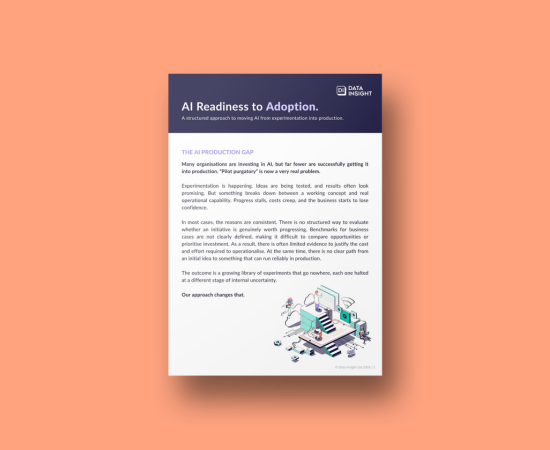
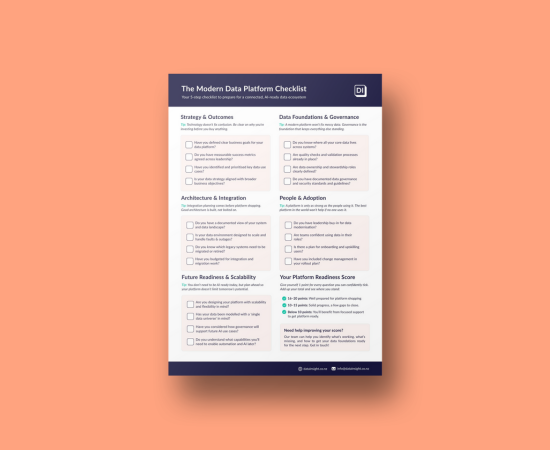
Most AI pilots do not fail because the technology did not work. They fail because nothing happened after it did.
This is one of the most consistent patterns we see across New Zealand organisations right now. Experimentation is happening, ideas are being tested, and genuine enthusiasm exists at both the leadership and delivery level. But the gap between a working proof of concept and something that actually runs in production is wider than most organisations expect, and crossing it requires more than technical capability. It requires structure, discipline, and a clear-eyed view of what is actually getting in the way.
After working across dozens of AI initiatives with New Zealand enterprises, we have identified six barriers that come up again and again.
None of them are primarily technical problems. They are structural ones, and that distinction matters, because technical problems get solved by technical people. Structural problems need to be solved by the organisation.
1. The problem was never clearly defined
This one sounds obvious, but it is the most common starting point for initiatives that eventually stall. Teams get excited about AI, which is entirely understandable given the pace of change, and jump to tools, vendors, and use cases before anyone has clearly articulated what operational or commercial problem they are actually trying to solve. The question "what do we do with this result if the AI works?" gets skipped, and when the pilot ends, there is no clear answer to it.
Before building anything, the problem needs to be shaped carefully.
That means understanding the business process in detail, defining what success looks like in measurable terms, and being honest about whether this is a problem worth solving in the first place. The organisations that successfully get AI into production start with disciplined problem selection, not idea generation.
2. The pilot was not designed to generate a decision
There is a meaningful difference between a pilot designed to explore and one designed to prove, and most organisations are running the former when they need the latter. Exploratory pilots are useful for building understanding, but they rarely produce the evidence needed to justify the investment required to scale. When they end, there is often no clear answer to whether the solution works with real data and real workflows, what it would actually cost to build and run at scale, or whether the return on investment is genuinely there.
A well-structured pilot should be time-boxed, built around a clearly defined use case, and designed with success metrics agreed upfront by the people who will ultimately make the investment decision.
It should surface data constraints, integration complexity, and a realistic view of potential value. Without that, the results sit in a presentation and the initiative goes nowhere.
3. Data quality becomes a reason not to start
"We need to sort out our data before we can do anything with AI" is one of the most common things we hear from New Zealand organisations, and while it is sometimes true, it is often functioning as something else entirely: a reason to delay, frequently an unconscious one, because starting something new feels uncertain and risky.
The reality is that you do not need perfect data to run a meaningful pilot.
What you need is an honest assessment of which data issues genuinely block value and which ones do not. Those are very different things, and the only way to find out is to test with the data you actually have. Waiting for data perfection before beginning is one of the most reliable ways to ensure an AI initiative never gets off the ground, and by the time the data is "ready," the business case has often lost its urgency entirely.
4. The scale-or-stop decision gets avoided
This is where most organisations struggle, and where we see the most stalling. After a pilot concludes, there is often a period of extended ambiguity. The results are promising but not conclusive. There are open questions. No one wants to commit to the full investment required to scale, but no one wants to walk away from something that showed potential either. The initiative sits in review, and weeks quietly become months.
The problem is not that the decision is hard. It is that the decision is not being made with the right evidence or through a clear process.
There is no structured framework for evaluating what the results actually mean against the agreed success measures, quantifying the commercial impact, or defining what it would genuinely take to move forward. A disciplined scale-or-stop process does not mean forcing a premature conclusion. It means having a structured way to reach a confident one, in whichever direction that goes.
5. Nobody planned for what production actually requires
Getting something to work in a controlled pilot environment is a genuinely different challenge from making it work reliably in production, and this gap consistently catches organisations off guard. Production means integrating with existing systems and data pipelines, establishing governance and monitoring frameworks, and making real changes to the operating model so that people know how to work alongside the solution day-to-day. It means defining who is accountable when something goes wrong.
Most pilots do not account for any of this.
So when the decision to scale is finally made, the organisation discovers a much larger body of work than anyone anticipated, and that discovery often kills the momentum that the pilot built. The organisations that successfully operationalise AI think about production readiness early, not as an afterthought once the pilot has ended.
6. No one owns the solution once it is live
Even when an organisation successfully gets an AI solution into production, it can fail quietly over time if ownership has not been clearly defined. AI solutions are not set-and-forget. Models drift as the underlying data changes. Business requirements evolve. New edge cases emerge. Without a clear internal capability and ownership model, solutions degrade gradually, confidence in them erodes, and teams revert to the old ways of working they were meant to move beyond. The investment loses its value without anyone making a deliberate decision to abandon it.
Sustainable AI adoption requires defining who owns the solution, who monitors its performance, and who is responsible for maintaining and improving it over time.
That operating model needs to be agreed before go-live, not figured out in the months after.
What this means in practice
None of these barriers are insurmountable, but they do not resolve themselves. The organisations we see successfully getting AI into production share a common approach: they define the problem before building anything, they run pilots designed to generate decisions rather than just insights, they make evidence-based calls on what to scale, and they plan for production from the beginning rather than discovering its requirements at the end.
That structured path is what we bring to every AI engagement at Data Insight. If your organisation has initiatives that are stuck, or you want to make sure your next one actually crosses the line, we would love to talk.
Book in for a free consult at a time that suits you > Book Here